LAY / Layover Guides
Getting Real Sleep During An Overnight Layover
An overnight layover is less about killing time and more about protecting your sleep before the next leg of the trip.
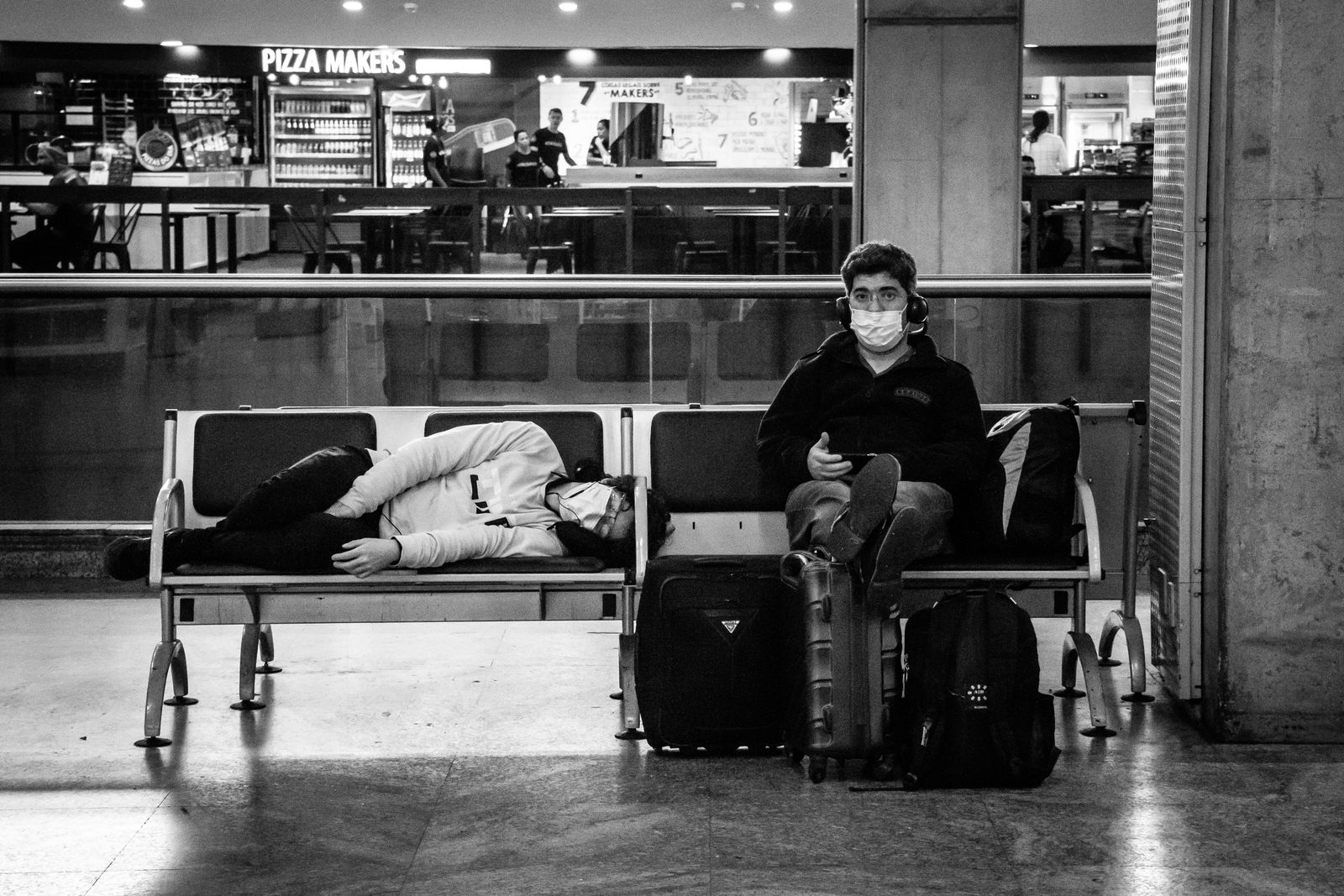
An overnight layover asks something different of travelers than a daytime one. The goal usually is not sightseeing or shopping, it is sleep, and the airport environment fights against that goal in almost every way, with bright lights, announcements, and hard furniture designed for sitting rather than resting.
Getting real rest during an overnight connection takes some deliberate choices made before you land, not decisions worked out at two in the morning while wandering a half-empty terminal.
Decide Early: Hotel, Terminal, Or Lounge
The first decision is where you will actually try to sleep. A nearby transit or airport hotel gives you a real bed and a locked door, which matters most for anyone who sleeps lightly or needs several consecutive hours. A paid lounge with quiet zones or recliner chairs is a middle option, offering more comfort than a public gate area without the cost or logistics of a hotel room.
Sleeping in the terminal itself, on a bench or the floor near a gate, is the least comfortable option but sometimes the only realistic one for very short overnight windows or airports without other facilities. If this is your situation, arriving with the right gear matters far more than usual.
What Actually Helps On A Hard Surface
An eye mask and earplugs do more for terminal sleep than almost anything else, since airport lighting rarely dims and announcements continue through the night at many hubs. An inflatable or compressible travel pillow that supports the neck sideways, rather than a standard neck pillow, tends to work better for lying across several seats or a bench.
A light blanket or oversized scarf helps too, since terminal air conditioning often runs cold overnight regardless of outside temperature. None of this fully replicates a real bed, but it noticeably improves what you can get on a bench.

Where To Actually Sit Or Lie Down
Not every gate area is equal for this purpose. Areas away from major walkways and food courts tend to be quieter, and some airports have specific rest zones with dimmer lighting or reclining furniture, sometimes marked on terminal maps. Arriving early to claim one of these spots is worth the effort, since they fill up fast once a red-eye or two lands around the same time.
- Book a hotel or lounge in advance for overnight layovers longer than about six hours
- Pack an eye mask, earplugs, and a light layer specifically for the terminal's climate
- Head for quiet zones away from food courts and major walkways
- Set multiple alarms, since a single phone alarm is an easy thing to sleep through after exhaustion
- Keep your passport and boarding pass on your body, not in a bag you might sleep on top of
Protecting Your Belongings While You Sleep
Sleeping in a public space means your attention to your belongings drops, so it helps to loop a bag strap around your leg or arm, or use a small cable lock on a zipper. Keeping your passport, wallet, and phone in a pocket rather than a bag pocket means the most critical items stay with you even if you sleep deeply.
Its worth noting that some airports post security staff overnight specifically because of how many travelers sleep through connections, so a quieter zone is not necessarily an unmonitored one.
Adjusting To A New Time Zone Mid-Trip
An overnight layover often lands in the middle of a time zone shift, which can make it hard to know whether you should be trying to sleep at all or pushing through to adjust faster. As a rough guide, if your overnight layover roughly matches nighttime at your final destination, it is worth sleeping as much as possible. If it does not, a shorter rest followed by staying awake through the rest of the local night can help you adjust faster once you arrive.
This is a personal calculation more than a strict rule, since some travelers adjust well by pushing through fatigue while others function far better after any amount of real sleep, regardless of the time zone math.
When Delays Turn A Layover Into An Overnight One
Sometimes an overnight layover is not planned but created by a delayed or cancelled flight. In these situations, ask the airline directly whether they provide a hotel voucher or meal vouchers, since policies vary widely and the offer is not always made automatically at the counter. Having a saved list of nearby hotel options on your phone before you need them means you are not searching from scratch at midnight with a dying phone battery.
It is also worth fully charging devices before an already long day of travel, since an unplanned overnight stay is exactly when a phone battery matters most, whether for finding a hotel, checking rebooking options, or simply staying in touch with people waiting for you.
Related guides
LAY / Layover Guides
Planning A 12-Hour Layover Without Wasting The Day
A 12-hour layover is nearly a full day, and the difference between a great one and a wasted one comes down to early planning.
Read Guide
APT / Airport Guides
Airport Hotels Explained
What airport hotels actually offer, when they're worth booking, and how to tell the different types apart.
Read Guide
FLT / Flight Guides
Long-Haul Flight Preparation
Practical ways to prepare for a long-haul flight, from packing and seat choice to managing jet lag before you even land.
Read GuideNext steps
Keep planning around layover guides
Move on to the next practical step: compare routes, check the airport you pass through, or read what a layover of your length allows.